Tyres
When to change your motorbike tyres: wear, age and cracks
By the workshop · 3 min read · October 7, 2026
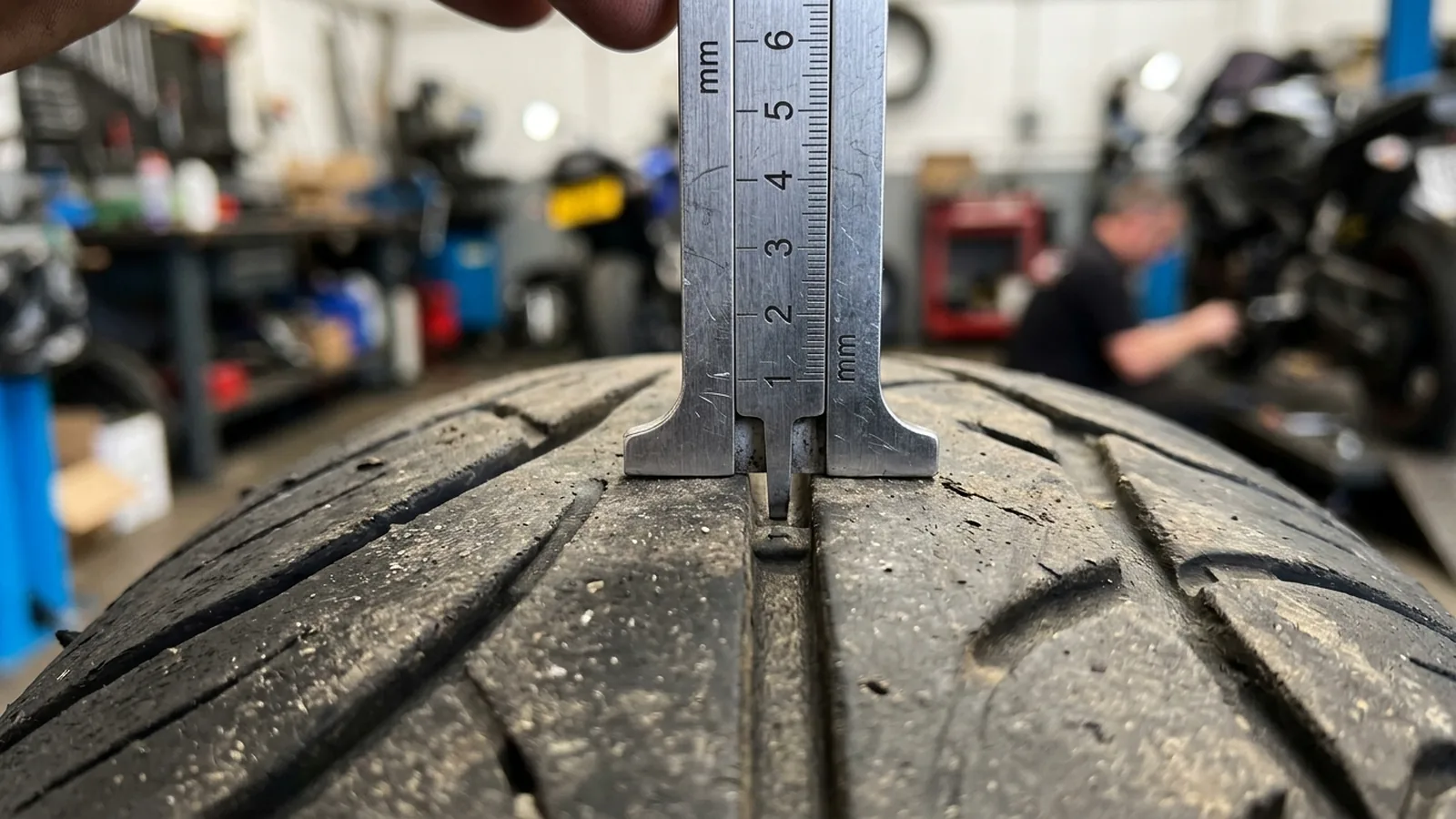
The tyre is the only part of the bike that touches the road, and it gets changed for four different reasons: because it's worn, because it's old, because it's damaged or because it has worn badly. Only the first one is obvious at a glance. Here's how to check the other three.
Tread and wear indicators
Inside the tyre's grooves there are small raised bars, the wear indicators. When the tread is down to their height, the tyre is at the limit. In Spain the legal minimum for motorbikes is 1.6 mm of depth in the main grooves; in the wet, a tyre close to the limit brakes and clears water far worse than one that's half worn.
The date: the DOT code
On the sidewall there's a code ending in four digits, the week and year of manufacture: 2321 is week 23 of 2021. Rubber ages even when it isn't rolling. From five years on, check them carefully even if they still have tread, and if there are cracks in the sidewall or at the bottom of the grooves they need changing: they harden and grip less.
Uneven wear: the flat centre
Lots of straight-road riding leaves the tyre flat in the middle with the sides like new. The bike turns in worse and gets nervous when you lean it over. Even if there's tread left on the edges, the tyre is finished. Stepped or saw-tooth wear, especially on the front, is another warning sign.
Damage: cuts, repaired punctures and knocks
A cut that shows the carcass, a bulge in the sidewall after hitting a kerb or a repaired puncture in the sidewall means replacing the tyre, not repairing it. A puncture in the tread can be repaired in many cases; one in the sidewall can't.
Pressure, every month
Half the tyres that reach the workshop worn out early have been run at low pressure. Check it cold once a month and before a trip, using the figure in your manual or on the bike's sticker, not the maximum moulded into the tyre.
How we do it at the workshop
We help you choose the right tyre for your bike and the way you ride it, then fit it, balance it and check the pressure and the valve. Book online, it's free. If you're not sure whether your tyres will last, drop in and we'll take a look.
What you ask us
Do both have to be changed at the same time?
Not necessarily: the front usually lasts longer than the rear. What you should do is keep the same type of tyre front and rear, and not pair a new one with a very old one.
Do tyres on a bike that's hardly used last forever?
No. They age with time, and summer sun and heat speed that up. Check the date and look for cracks, even if the tread is intact.
Can a puncture be repaired?
In the tread, often yes, with a repair from the inside. In the sidewall or near the edge, no: that part of the tyre flexes as it works and the repair won't hold.
We do it
Would you rather not get your hands dirty?
We get it ready for you at the workshop. Book a slot and pick a real time.